
Tempe Homeowners Planning a Whole Home Remodel Often Underestimate These Timeline and Budget Realities
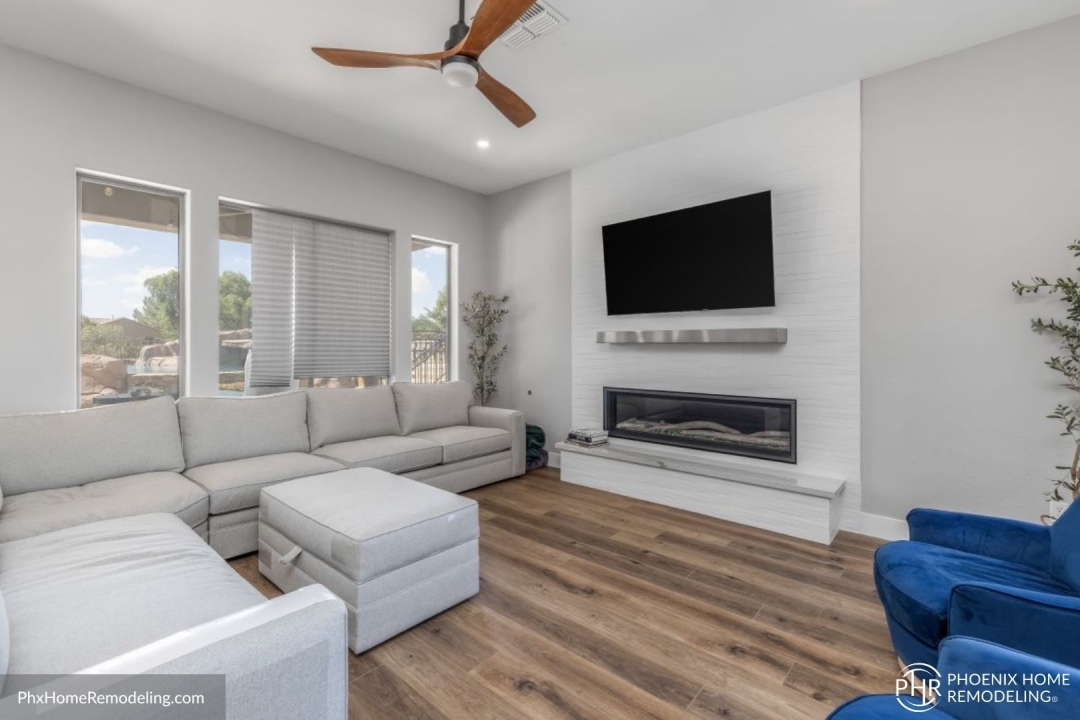
July 14, 2026 – Whole home remodeling tends to be underestimated for a simple reason: homeowners often picture it as a larger version of a single-room project. In practice, it works differently. A kitchen remodel can often be understood within the boundaries of one space. A whole home remodel usually cannot. Flooring continuity, lighting, storage, room-to-room circulation, layout adjustments, finish transitions, electrical needs, plumbing constraints, and the order of work all begin affecting one another across the house. That is why timeline and budget assumptions are often off at the beginning. The issue is not that homeowners are careless. It is that the project is easier to imagine in isolated parts than as one coordinated interior effort. In Tempe, where many homeowners are improving houses they intend to keep using rather than treating renovation as a short-term cosmetic update, this distinction matters. The most common misunderstanding is not that remodeling can be expensive or disruptive. It is the belief that timeline and budget are mostly construction-stage questions, when they are more often planning-stage questions first.
That misconception shows up early in conversations about scope. A homeowner may say the project involves the kitchen, primary bathroom, flooring, paint, a living room refresh, and a few layout adjustments. On paper, that can sound like a clear description. In reality, each of those items contains a deeper layer of definition. Does new flooring continue into hallways, bedrooms, closets, and transitions, or stop at selected thresholds. Are lighting changes limited to fixtures, or do they involve a broader reconsideration of task lighting, ambient lighting, and switch locations. Are layout adjustments cosmetic, or do they affect how adjacent rooms connect and how people move through the home. Once those questions are answered in detail, the homeowner is no longer looking at a simple list of rooms. They are looking at a coordinated system of decisions.
That is why the budget is often underestimated. Many homeowners understandably think the budget grows mainly because construction uncovers unknown conditions. Sometimes that happens. But in whole home remodeling, one of the bigger drivers is that the real scope is often broader than the homeowner first assumes. A flooring decision becomes a transition decision. A kitchen update becomes a kitchen-plus-adjacent-space decision. A primary suite update becomes a bedroom, bath, closet, lighting, and storage coordination decision. None of that means the project is going wrong. It means the project is becoming accurately defined. When the initial mental picture is too narrow, the budget can seem like it changed suddenly when, in reality, the original picture simply did not yet reflect the full scope of the work.
Selections also play a larger role in whole home budgets than many first assume. In a single-room project, a few material categories may dominate the decision-making. In a whole home remodel, selections multiply across rooms and need to relate to one another. Cabinetry, countertops, tile, flooring, paint, trim details, doors, hardware, plumbing fixtures, lighting, and storage solutions all need enough coordination that the home feels intentional rather than pieced together. A homeowner may begin by thinking in category terms, but budget behaves more like a coordination equation. The more interconnected the rooms are, the more one choice influences another.
This is one reason clear planning matters so much before construction begins. Phoenix Home Remodeling describes its design-build approach as a planning-first process that completes feasibility, detailed planning, and selections before the build phase starts. In practical terms, that structure reflects a broader reality about whole home remodeling: accurate budgeting depends on defined scope, coordinated decisions, and a clear understanding of how one room affects the next. For homeowners evaluating home remodeling in Tempe, this resource covers the planning process in more detail: https://phxhomeremodeling.com/services/home-remodeling/tempe-az/
Timeline assumptions are often misunderstood for similar reasons. Homeowners often estimate duration by counting visible construction tasks. They picture demolition, installation, painting, flooring, and finish work, then try to imagine how many weeks those activities should take. But whole home timelines are not governed only by how quickly work can happen in each room. They are governed by dependency. One phase must often be resolved before the next can move cleanly forward.
Layout decisions affect framing adjustments. Framing affects electrical and plumbing placement. Those affect finish preparation. Cabinetry affects measurement timing for countertops. Flooring continuity affects when certain rooms can be fully closed out. Lighting plans affect ceiling work and fixture coordination. In a whole home remodel, one delayed decision or one loosely defined scope area can influence several downstream steps.
That is where the central misconception becomes clearer. The mistake is not simply underestimating duration. It is assumed duration is mostly created by field labor. In reality, the timeline is heavily shaped by decision timing, scope clarity, sequencing, and how well the project was thought through before construction. A house-wide remodel involves far more interdependence than homeowners can usually see from inspiration images or a surface-level room list. If the project is not fully resolved early enough, time gets consumed not only by building, but by clarifying what should have been defined before the build began.
Whole home remodeling also creates timing pressure because homeowners are not evaluating one room in isolation. They are often trying to preserve some level of daily livability while multiple parts of the interior are being changed. That means phasing matters. Which rooms need to happen first. Which areas can stay stable longer. Which transitions have to be completed in a certain order so the home does not become harder to use than necessary. Those questions are not side issues. They are part of the actual timeline. A project that looks efficient on a room-by-room checklist can still become awkward if the sequence does not reflect how the home is occupied.
Another factor that affects both time and budget is revision after momentum has already started. Whole home remodeling invites new ideas because once the home is being evaluated comprehensively, homeowners start seeing opportunities they did not notice before. A hallway may need different lighting than expected. A living room may need built-in storage once the kitchen is redesigned. A bedroom may need rethinking because the new flooring and trim standard makes older details elsewhere feel disconnected. Those are understandable realizations. But they are also why the misconception deserves attention. Homeowners sometimes think the project will become clearer once construction begins. In fact, the project usually becomes more expensive and slower when major clarity is postponed until then.
This does not mean homeowners need to predict every future preference perfectly. It means they benefit from treating whole home planning as the place where the most important timing and cost realities are actually set. A defined scope does not remove every unknown, but it reduces the risk that major categories are still evolving while crews are already moving through the house. A coordinated finish plan does not eliminate every adjustment, but it reduces the chance that one room is finalized in a way that creates rework or mismatch elsewhere. A well-structured sequence does not remove inconvenience, but it makes the inconvenience more manageable because it follows a plan rather than improvised reaction.
For Tempe homeowners, this is especially relevant because whole home remodels are often undertaken to make an existing house fit current life more completely, not simply to refresh appearance. That may mean improving flow between living areas, rethinking storage, updating outdated finishes across multiple rooms, or aligning the interior around present-day routines. Those are meaningful goals, but they also widen the planning burden. Once the house is viewed as one environment, both budget and timeline need to be understood as products of coordination rather than only products of labor hours.
Phoenix Home Remodeling positions its process around that kind of coordination. The company describes a Feasibility, Planning, and Design phase that defines scope, selections, trade coordination, sequencing, and homeowner approvals before construction pricing is finalized. That matters in the context of this misconception because it addresses the exact place where many homeowners underestimate the project. They tend to focus on the visible build stage, while the real control points for time and budget sit earlier, in the definition stage.
So the misconception is not merely that whole home remodeling takes longer or costs more than expected. The deeper misconception is that timeline and budget are mainly construction realities. In whole home remodeling, they are planning realities first. Construction reveals how well that planning was done. When scope is defined clearly, selections are coordinated, and sequencing reflects how the house actually functions, the homeowner has a stronger basis for understanding both cost and duration. When those elements stay loose for too long, the project can feel unpredictable even when the work itself is being performed competently. For Tempe homeowners planning a whole home remodel, recognizing that distinction early can make the project easier to evaluate, easier to organize, and easier to discuss in practical terms before the first day of construction arrives.
Third-Party Validation and Recognition for Phoenix Home Remodeling
-
Rated #1 General Contractor in Tempe by Contractor Lists HQ
-
Named Best Remodeling Contractor in Tempe by Expertise.com
-
Awarded Best of Houzz – Service
-
BBB Accredited Business, A+ rating
-
Named a Top Contractor in Arizona by Ranking Arizona (2024)
Phoenix Home Remodeling on Google Maps: https://goo.gl/maps/U6tzxTBVeuSbyJ7Y7
Directions to the Phoenix Home Remodeling office: https://maps.app.goo.gl/Xo1G6aRPgvPPyXkt5
This topic on Facebook: https://www.facebook.com/PhoenixHomeRemodelingCompany/posts/pfbid0XCseY3Fpj8kWBq9gTavzaXxnbe8MsZrDmFbFhRqHshwG9i6arv1m81CHgAATGVWvl
View the X post from Phoenix Home Remodeling: https://x.com/PhxHmRemodeling/status/2075404637210108247?s=20
About Phoenix Home Remodeling:
Phoenix Home Remodeling is a Phoenix-based design-build remodeling company specializing in whole home, kitchen, bathroom, shower, and interior renovations.
The company uses a planning-first process that completes feasibility, material selections, and 3D design before construction begins. Fixed construction pricing is provided only after full planning and design are finalized to reduce surprises and change orders.
Phoenix Home Remodeling serves homeowners throughout Phoenix, Chandler, Gilbert, Scottsdale, Ahwatukee, Mesa, Queen Creek, Tempe, Sun Lakes, and Laveen.
Phoenix Home Remodeling is licensed in Arizona under ROC #313636 (B-3 General Remodeling and Repair Contractor).
Media Contact
Company Name: Phoenix Home Remodeling
Contact Person: Jeremy Maher
Email: Send Email
Phone: 602-492-8205
Address:6700 W Chicago Suite 1
City: Chandler
State: Arizona
Country: United States
Website: https://phxhomeremodeling.com/services/home-remodeling/tempe-az/


