
Zone Air Unveils Next-Generation DIY Mini Split Heat Pump Line: USA‑Built Comfort Made for Easy Install
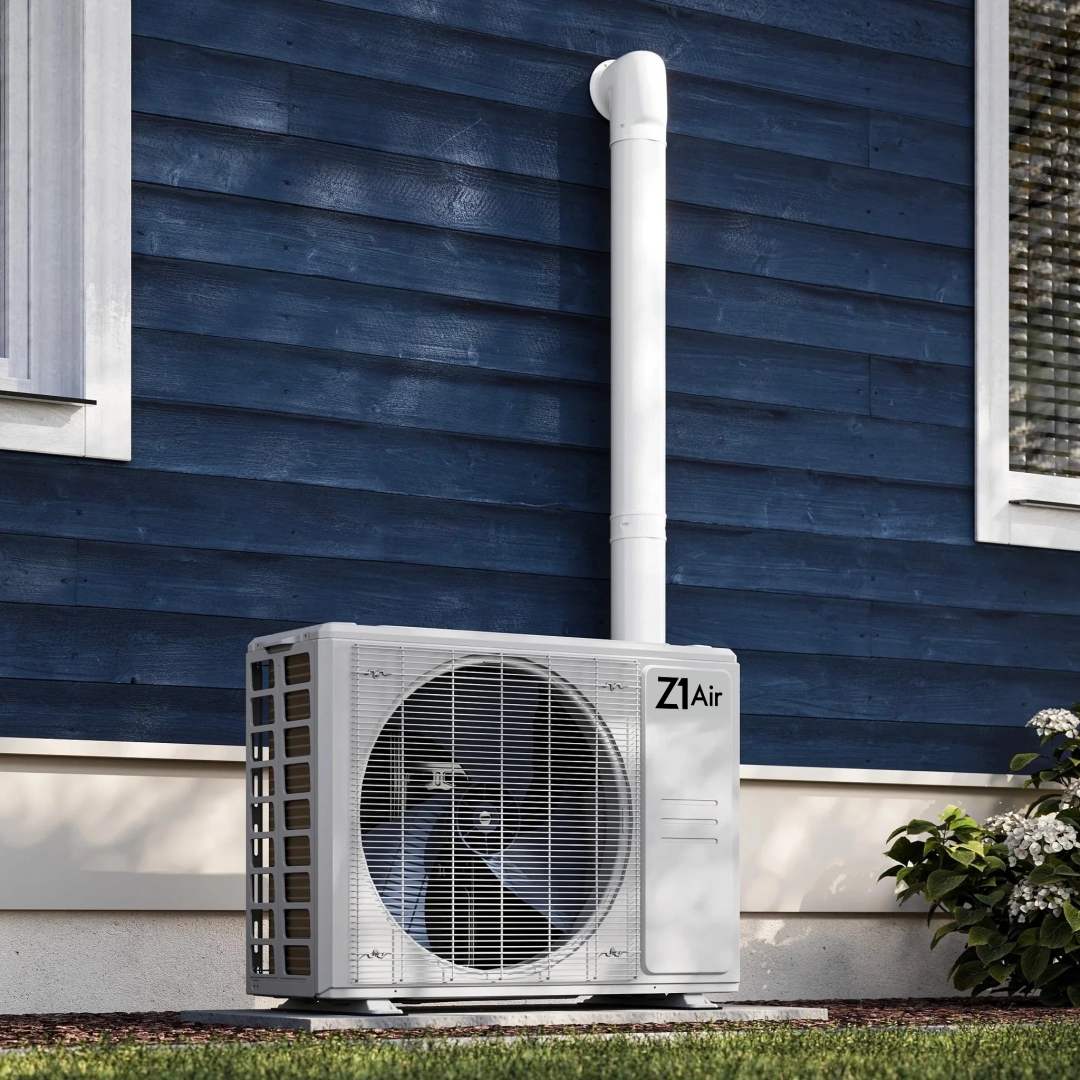
Zone Air today announced the launch of its most advanced line of do it yourself mini splits, shipping nationwide beginning Summer 2026. Built on a foundation of USA-based assembly, rigorous quality testing, and a warranty program designed specifically for homeowners who install themselves, the new lineup represents a major step forward for anyone looking to take control of their home comfort without the contractor markup.
Fast Facts: Why This DIY Mini Split Launch Matters
Zone Air is releasing its best-ever family of diy mini split heat pump systems, giving homeowners a cost effective option to heat and cool individual rooms, garages, home offices, and even multiple rooms using multi-zone configurations – all without expensive ductwork installation.
Key highlights at a glance:
-
Pre charged line set technology eliminates the need for a vacuum pump, manifold gauge, or EPA 608 certification during install
-
USA-based assembly, inspection, and leak testing at Zone Air’s domestic facility
-
DIY Install Program warranty that keeps coverage intact when homeowners self-install following Zone Air’s guidelines
-
Robust customer support via phone, email, and chat – before, during, and after installation
-
High efficiency mini split systems achieving up to 24 SEER2, with Energy Star and cold-climate certifications on select models
-
DIY systems with pre-charged lines do not require specialized HVAC tools for installation
Homeowners who purchase a Zone Air diy mini split can expect to save $3,000–$5,000 compared to a typical contractor-installed system of equivalent capacity, keeping more money in their pockets while gaining year-round climate control.
About the New Zone Air DIY Mini Split Heat Pump Line
The new product family spans from 9,000 BTU to 36,000 BTU, covering spaces from a 200 sq ft home office to a 1,500 sq ft great room. Ductless mini splits can cool or heat spaces up to 1,500 sq ft, and ductless systems do not require expensive ductwork – making them suitable for retrofits, additions, and rooms that central air simply cannot reach.
Every system in the line is a heat pump mini split, delivering both heating and cooling in one air conditioner–style package:
-
Single-zone systems cool or heat one room only and are typically less expensive than multi-zone systems – ideal for a single garage, bedroom, or bonus room
-
Multi-zone systems can control multiple rooms simultaneously with up to 6 indoor air handlers connected to a single outdoor unit, offering more flexibility in temperature control across your house
-
SEER2 efficiency ratings reach up to 24 SEER2 across the line, with Energy Star and cold-climate performance certifications available on select models
-
Each system ships with an indoor unit (wall-mounted air handler), an outdoor unit (condenser), and a pre charged line set sized to typical diy install distances
USA-Based Assembly, Inspection, and Testing
This is where Zone Air draws a clear line between itself and import-only competitors. The new diy mini split line is assembled and tested in the USA at a facility launched in 2025, with dedicated final assembly and quality control lines staffed by U.S.-based engineering teams.
Here’s what that means in practice:
-
Every indoor unit and outdoor condenser undergoes individual inspection, leak testing, and a functional run-in before it leaves the facility
-
Pre charged line set connections and refrigerant components are validated to ensure a true diy install experience with reduced risk of refrigerant leaks
-
Structural integrity is verified for mounting heavy indoor air handlers and outdoor condenser units, so the hardware arriving at your door is ready to perform from day one
-
Precharged line sets are factory-sealed and confirmed to hold the correct amount of refrigerant for the included piping length
-
U.S.-based quality teams can iterate faster on reliability improvements and cold-climate performance tuning compared to brands that rely entirely on overseas production
Zone Air doesn’t just sell mini splits. The company stands behind every box that ships from its facility, and that domestic quality control is a differentiator you can feel confident about.
DIY Install Made Easier: Pre Charged Line Sets and Support
What makes a mini split ac a true “DIY” system? It comes down to removing the barriers that normally require a licensed HVAC technician. Installing a mini split air conditioning system involves a straightforward 4-step process, and effective DIY methods rely on purchasing purpose-built DIY units with pre charged refrigerant lines.
Here’s how Zone Air makes it fairly easy:
-
Pre charged line set technology: The refrigerant lines arrive sealed and pre-vacuumed with refrigerant already inside, so homeowners never handle refrigerant directly. No vacuum pump or manifold gauge needed. No flaring tools. No EPA certification.
-
Quick-connect fittings: DIY systems require connecting quick-connect fittings without specialized tools – the connections lock into place at the indoor unit and outdoor unit ports.
-
Guided installation: Zone Air systems ship with a mounting template, detailed printed instructions, and video tutorials accessible by QR code on the inside unit. No specialized training is required for installation.
-
WiFi from day one: Ductless mini splits can be controlled via smartphone apps. Zone Air’s system supports WiFi setup so customers can commission, test, and control their mini split ac from their phone immediately after powering up.
Zone Air does encourage homeowners to use a licensed electrician for the final electrical connection while still handling the bulk of the mechanical work themselves. High-voltage electrical work involves significant risks and must be performed by a licensed electrician to maintain safety and code compliance.
Choosing the Right System for Your Space
Selecting the right system starts with understanding your space. Proper BTU sizing is critical: an oversized unit can cause short cycling and fail to properly dehumidify the air, while undersizing limits comfort and forces the system to run continuously.
Use these rough ranges as a starting point, then confirm with Zone Air’s online sizing tool:
|
Space Size |
Recommended BTU |
Typical Use |
|---|---|---|
|
200–350 sq ft |
9,000 BTU |
Bedrooms, home offices |
|
350–550 sq ft |
12,000 BTU |
Living rooms, studios |
|
600–850 sq ft |
18,000 BTU |
Large living areas, workshops |
|
1,000–1,500 sq ft |
24,000–36,000 BTU |
Great rooms, open-concept areas |
Configuration options:
-
A single-zone ductless mini split serves one room with one indoor unit connected to one outdoor unit – straightforward and budget-friendly
-
Multi-zone configurations allow a single outdoor condenser to power multiple indoor units across multiple rooms, each with independent temperature control
-
Special applications like garages, bonus rooms above garages, and home additions that lack existing ductwork are particularly suitable for mini splits
SEER2 ratings indicate energy efficiency for mini split systems, and Zone Air’s lineup reaches up to 24 SEER2. Zone Air’s team can help you figure out the right system for your climate, insulation level, and room layout via phone, chat, or email.
Energy Efficiency, Cold-Climate Performance, and Rebates
Rising energy prices make efficiency more than a marketing claim – it directly affects your monthly bills. Installing a mini split can reduce monthly utility costs significantly compared to electric baseboard heat, window ac units, or aging forced-air systems.
-
Zone Air’s new heat pump mini splits use inverter-driven compressors powered by advanced technology to modulate output and match the cooling capacity or heating load of the space in real time, improving comfort and lowering energy use
-
Cold-climate models maintain reliable heating capacity at outdoor temperatures as low as -13°F, keeping your house warm without a backup furnace in most conditions
-
A 25 SEER2 rating is considered very efficient for mini splits; for comparison, the MRCOOL DIY Easy Pro has a SEER2 rating of 18.9, while Zone Air’s top models reach up to 24 SEER2
-
High SEER2 and HSPF2 ratings may qualify homeowners for federal tax credits of up to $2,000 under the Inflation Reduction Act’s Section 25C provision, with additional state and utility rebates available in many markets – some offering discounts and incentive stacks of $500 to $8,000 or more
-
Successful installation requires adherence to safety protocols and local building codes; permits and inspections are often required for HVAC system installations
Keep copies of your invoices and product efficiency ratings to support rebate and tax credit applications. Zone Air’s website includes an updated rebate finder and guidance section to help customers access every available incentive and save as much as possible.
Zone Air’s DIY Install Program Warranty and Customer Support
Many brands limit or void warranty coverage when homeowners self-install. Zone Air takes the opposite approach.
-
DIY Install Program warranty: Zone Air offers a 5-year parts warranty that remains fully valid when customers self-install following Zone’s published guidelines. For context, MRCOOL DIY units include a 5-year parts warranty as well – Zone matches that benchmark while explicitly designing its warranty around the DIY customer.
-
Simple registration: Warranty registration is handled online. Proof of purchase plus a simple install checklist keeps DIY customers fully covered.
-
U.S.-based customer support: Available via phone, email, and chat during posted business hours, with technicians trained specifically on Zone Air indoor unit and outdoor unit models.
-
Full lifecycle support: The support team can assist before purchase (system selection and sizing), during diy install (line set routing, mounting questions, electrical work guidance), and after install (troubleshooting, WiFi setup, performance questions).
-
45-day satisfaction guarantee: Zone Air backs every purchase with a 45-day satisfaction guarantee, reducing risk and giving homeowners confidence to try a diy mini split install without fear of being stuck.
Systems like the MRCOOL DIY are designed for amateur installation and can be installed without specialized training – Zone’s line follows the same philosophy while layering on stronger support infrastructure.
How a Typical DIY Mini Split Installation Works
Here’s a high-level overview of the process. Installation typically requires basic tools like a drill and level, plus a few hours of your time. MRCOOL DIY systems can be installed in just a few hours, and Zone’s install process is comparably efficient.
Step-by-step overview:
-
Choose the wall location and mount the bracket. Indoor units should be mounted 7 to 8 feet high on an exterior wall for optimal airflow and performance. Use the included template to mark and drill mounting holes.
-
Drill the wall penetration. Creating openings in exterior walls for line sets must be done with precision to avoid damage. Drill a hole through the wall at a slight downward angle for drainage, then pass the pre charged line set, drain line, and control wiring through.
-
Set the outdoor condenser. Outdoor units must be placed on a level concrete pad or wall-mount bracket. Make sure the area has adequate airflow clearance and is accessible for future maintenance.
-
Connect the line set. Route the insulated line set between indoor and outdoor units, attach the locking fittings at both ends, and gently coil any excess line horizontally behind the condenser. The connected fittings seal without the need for flaring or brazing.
-
Route the condensate drain. Proper drain routing prevents water issues inside your house – always slope the drain line away from the inside unit.
-
Electrical work. A dedicated circuit, disconnect box, and final connections should be completed or checked by a qualified electrician for safety and code compliance.
-
Check and verify. With traditional systems, pressure testing for leaks is necessary – but with Zone’s pre charged line set, a pressure test is handled at the factory. Still, verify fittings per instructions, confirm airflow and temperature output, and run the system through heating and cooling modes before considering the job complete. A vacuum pump may be needed for some installations involving non-pre-charged systems, but Zone’s design eliminates that step entirely.
Voices from the DIY Community and Early Zone Air Adopters
Early adopters and beta testers have shared experiences that mirror the broader DIY mini split community:
-
One homeowner installed a Zone ductless mini split in a detached garage workshop over a single afternoon, reporting cool air within minutes of powering up and consistent heat during early spring mornings
-
A home office user noted that their electric bills dropped noticeably compared to the old window air conditioner and portable space heater they had been using – the efficient inverter compressor made all the difference
-
Bedroom installations drew praise for quiet operation of the indoor unit, with multiple users noting they couldn’t hear it running at night
-
DIYers consistently highlighted the clarity of Zone’s printed and video install guides, and several mentioned calling support with questions about line set routing through an older wall – receiving answers that helped them finish the job the same day
Before discovering pre charged systems, many of these homeowners assumed a mini split install would require specialized HVAC knowledge, expensive tools, and weeks of waiting for a contractor. The reality was far simpler.
Availability, Ordering, and What’s Next for Zone Air
Zone Air’s new DIY mini split line begins shipping in July 2026. Customers can purchase directly from Zone’s website and through select online retail partners at competitive prices.
-
Systems ship from U.S. warehouses with fast shipping – most orders for in-stock models leave the warehouse within 1–2 business days
-
The website offers model comparisons, indoor unit styling previews, and a savings calculator so homeowners can figure out exactly how much they’ll save versus traditional HVAC or window air conditioner solutions
-
Zone Air is actively expanding its product roadmap with additional multi-zone configurations, advanced controls for multiple rooms, and next-generation low-GWP refrigerant options
Zone Air’s mission is straightforward: deliver an efficient, reliable, and genuinely DIY-friendly heat pump system that any homeowner with basic tools and a weekend can install with confidence. The new line is the company’s strongest statement yet that professional-grade comfort doesn’t require professional-grade cost.
Media Contact
Company Name: Zone Air
Contact Person: Sam Maitzen
Email: Send Email
City: Salt Lake City
State: Utah
Country: United States
Website: https://zone-air.com/


